The name alone is worth understanding before you arrive. Kampong is Malay for village — a word that reflects Singapore's pre-colonial and early colonial geography, when the island was organised around fishing communities, trading posts, and kampong settlements that lined the river and coast. Glam refers to the gelam tree (Melaleuca cajuputi), whose bark was used to caulk boats and whose presence along this stretch of the coast gave the area its name. By the time Raffles designated it as the Malay quarter in his 1822 town plan, the gelam trees were already the defining feature of the landscape. They are mostly gone now, but the name, and something of the quarter's character, persists.
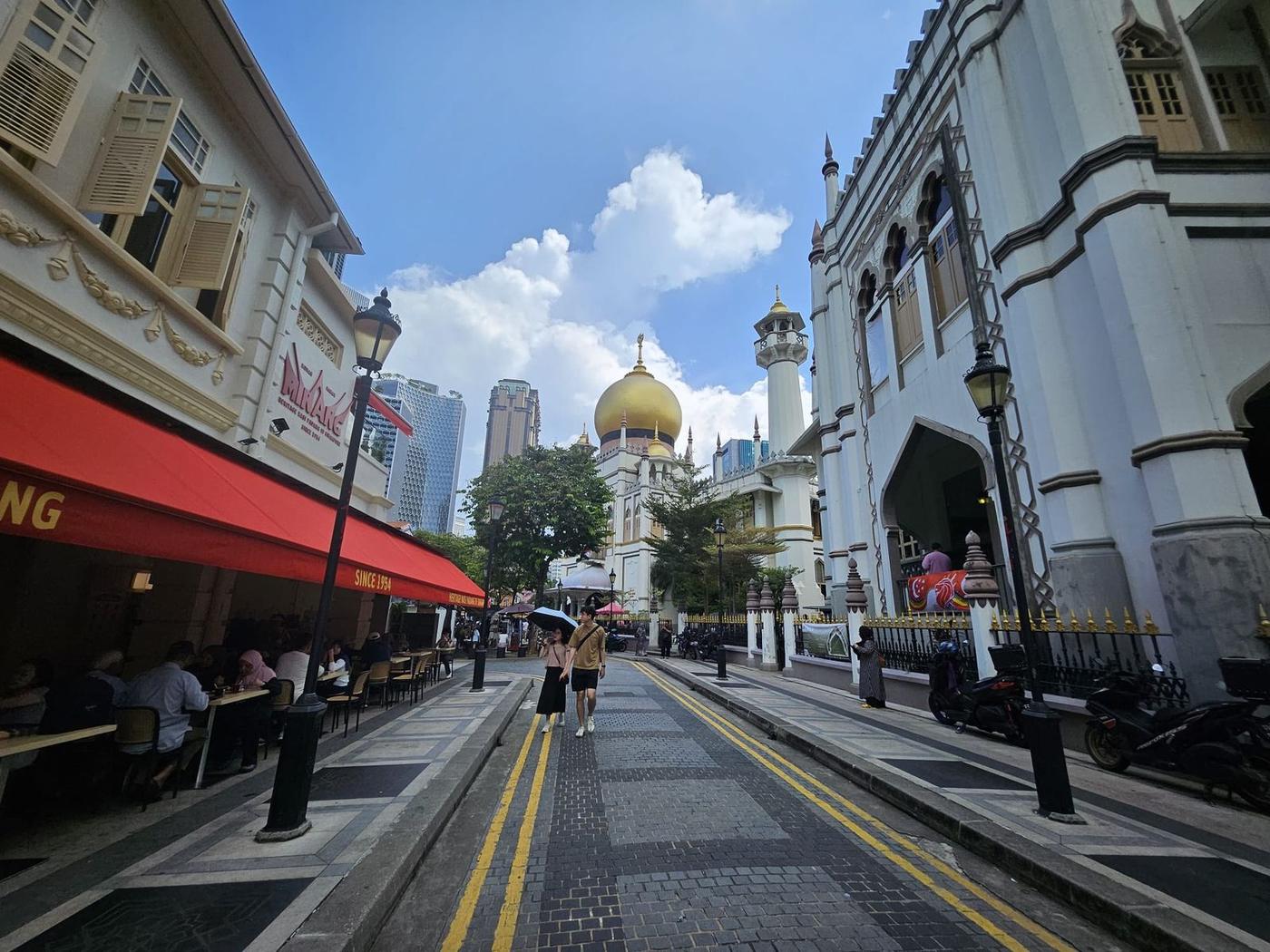
The Sultan Mosque: the centre of the quarter
Sultan Mosque dominates the northern end of Kampong Glam in a way that few religious buildings dominate their surroundings in Singapore. The current building was completed in 1932, replacing an earlier mosque from 1824 that had been funded partly by the British East India Company as part of the agreement under which Sultan Hussein Shah ceded Singapore to Raffles. The golden domes are the obvious feature — less obvious is the base of the smaller domes, which is made from the bottoms of glass bottles donated by the Muslim community during the construction fundraising. Look closely at the dome bases from the exterior courtyard.
The mosque is open to non-Muslim visitors outside prayer times. Dress modestly — robes are available to borrow at the entrance if needed. The interior is large enough to accommodate several thousand worshippers for Friday prayers. The carpets, the acoustic properties of the main hall, and the view back across Arab Street from the entrance courtyard are all worth the visit.
Haji Lane: what it is and what it has become
Haji Lane is one of Singapore's narrowest streets — one-way, about 200 metres long, lined with two-storey shophouses. The original commercial activity of the street was connected to the pilgrimage economy: returning haj pilgrims would sell goods brought back from Saudi Arabia, and the street became associated with the retail trade around religious items and textiles. That commercial history is now almost entirely invisible. What replaced it is a concentration of independent boutiques, vintage clothing shops, street art murals, and small food establishments that has made Haji Lane one of Singapore's most photographed streets.
The best time to visit is on a weekday afternoon, when the murals are well-lit and the shops are open but not overwhelmed with weekend foot traffic. The art changes regularly — some murals have been commissioned from internationally known artists, others from Singaporean street artists, and the resulting layering of styles is more interesting than the curated street art in many other Asian cities.
Arab Street and the textile history
Arab Street takes its name from the Arab traders — primarily Hadhrami Yemenis — who settled in this quarter from the early 19th century. The Alsagoff family, the Aljunied family, and other Arab merchant families were among the wealthiest and most influential figures in colonial Singapore. Their commercial activities centred on textiles, real estate, and the pilgrim trade to Mecca, and their presence defined the character of the quarter far more than the Malay community for whom it was nominally designated.
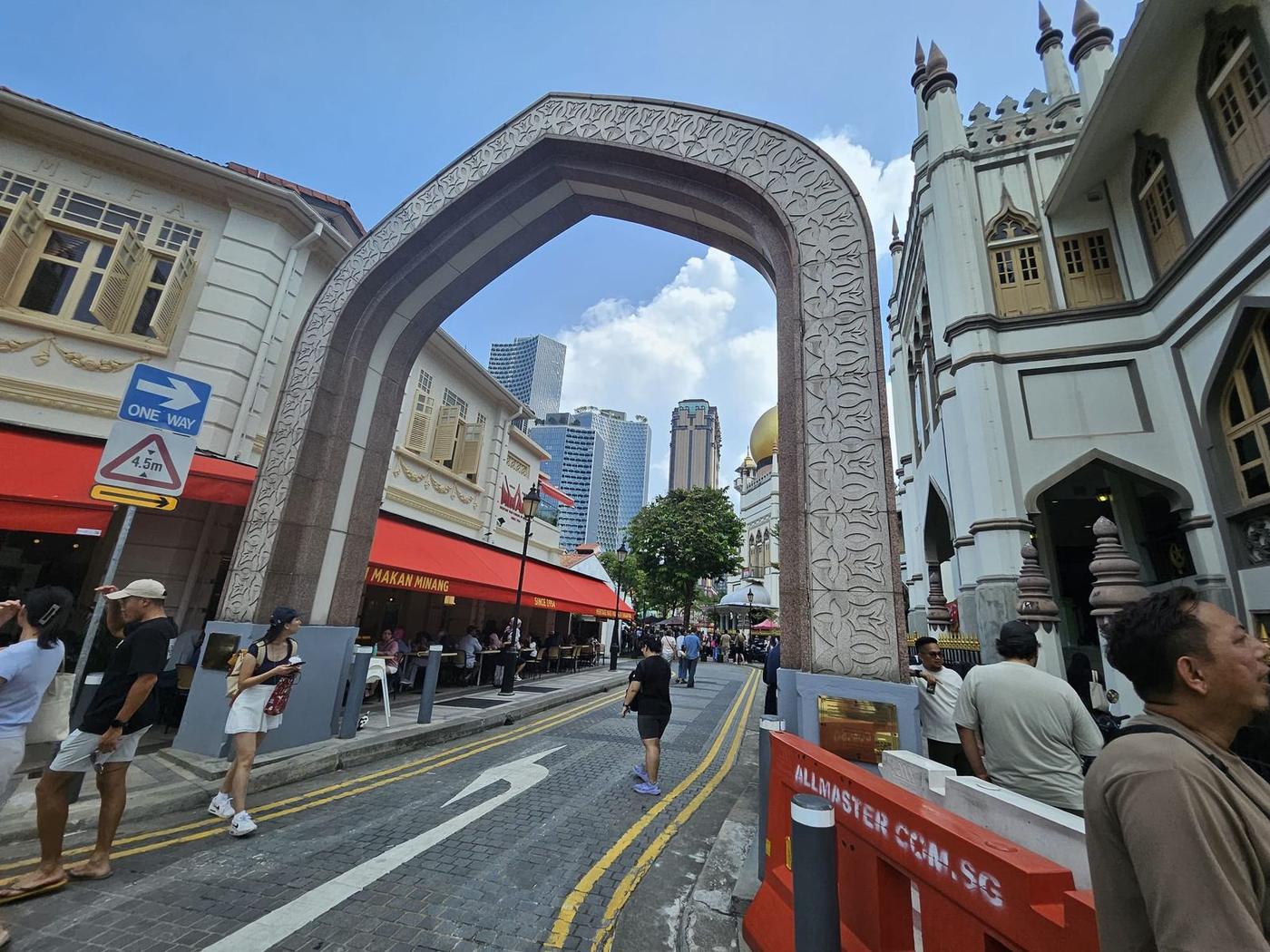
The textile shops on Arab Street are a genuine remnant of that commercial history. Batik fabric, songket weave, silk, and lace are available at prices and qualities that range from tourist-grade to genuinely excellent. If you're looking for fabric — for clothing, for upholstery, for gifts — this is the place to spend time. The shopkeepers know their stock and will explain the regional differences between Javanese, Malaysian, and Singaporean batik if you're interested.
Eating in Kampong Glam
The food in Kampong Glam is predominantly Malay and Middle Eastern, which makes it distinctive from most of Singapore's hawker landscape. Zam Zam Restaurant on North Bridge Road has been serving murtabak — stuffed flatbread with mutton, chicken or sardine filling — since 1908. The queues on weekends reflect the quality. Arrive early or be prepared to wait.
Hajjah Maimunah on Jalan Pisang is one of Singapore's best Malay restaurants — a straightforward nasi padang (rice with a selection of curries and cooked dishes) operation that has earned a Michelin Bib Gourmand recommendation and a faithful following among locals who want Malay food done properly without the tourist pricing. The nasi lemak is the benchmark item.
The café culture on Haji Lane and the surrounding streets is more artisanal coffee and Middle Eastern pastries than traditional Malay food. Both are available within a short walk of each other, which is part of what makes the quarter interesting — it is not a museum of Malay Singapore but a living district where the historical character and the current commercial activity are in visible negotiation.